JudgesLesson 3 - Chapters 4-5
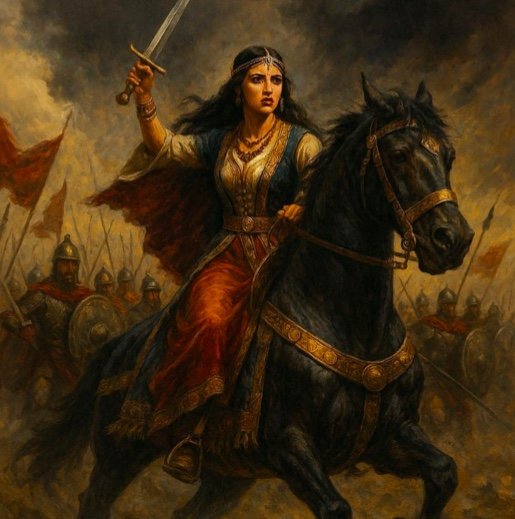
Judges 4 introduces us to one of my favorite characters in all of Scripture, Deborah. While this book is disturbing, it is also exciting in many places. The 2 chapters we will be studying this week are exciting. It’s hard to see a nation that was once united under the God of the Bible, fall repeatedly into sin and repeatedly into splintering their allegiance. It seems that everywhere we turn, biblical stories are a current reminder of what we are experiencing here in the United States. “One nation under God” almost seems like a pipe-dream 250 years after the founding of our country.
Last week we looked at the sin cycle. That wheel is gonna keep on turning throughout this book. That’s the sad part. The glad part is that God continuously intervenes and continuously draws His people back to Himself. That should give all of us hope.
1.Read Exodus 32:1-10. What is going on in these verses?
This incident took place less than 40 days after they escaped from Egypt! This means that 34-36 days earlier, they had experienced one of the greatest miracles recorded in the Bible, the parting of the Red Sea. (Note-It took them 4-6 days to travel from Egypt to the Red Sea.)
Can you imagine being witness to such an event and then turning your back on God just 34-36 days later (or even 40 years later for that matter)? As a chaplain, I’ve had so many bedside talks with people who were close to death and so many times I’ve heard the words, “Oh, I’m good with the man upstairs”, when I knew that they hadn’t lived according to the mandates of Scripture. Only the Lord knows what is inside us, but too many people are brazen when it comes to making statements like this. I have to wonder if the children of Israel thought they were good with God because, after all, He did part the Red Sea and the Jordan River for them.
Friends, never let your guard down when it comes to your relationship with God. That relationship should grow deeper and deeper as time goes on and we should never take Him and His goodness towards us for granted. Don’t discard Him like an old, used toy.
When we finished up Judges 3, we discovered that Israel had 80 years of peace after Ehud arose as their judge. And after Ehud died, Shamgar rose to be the judge of Israel. He killed 600 Philistines with an oxgoad. That is all we know about this fella.
We are not told about a sin cycle after Shamgar, only after Ehud. And we’re also not told about a time of peace after Shamgar.
A new sin cycle is about to commence in Judges 4. Read the first 3 verses.
Fill in what you know so far and you can go back and fill in the rest as we finish up Judges 5.
2.
Cycle #3

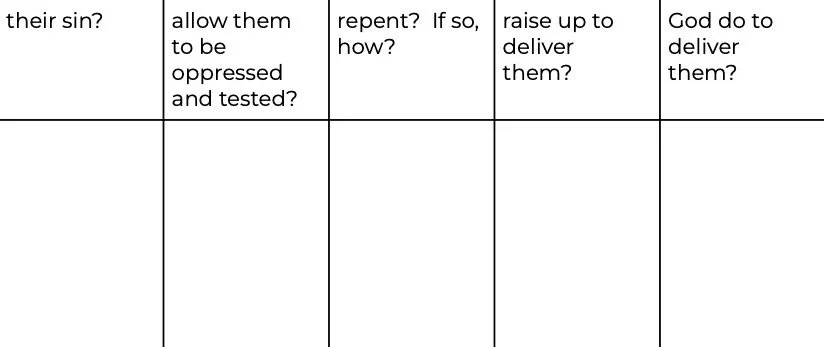
3.How long were the people in bondage this time around?
Are you starting to realize that God has a soft spot in His heart for His people? Just like we have a soft spot for our own children, God has one for His. And when our children have been disobedient and they are crying to us to help them, we’d never turn our back on them.
4.Why was the army of Canaan so foreboding to them?
In Book 5 of Josephus’s Antiquities of the Jews, he chronicles the formidable army of Jabin at a place in the northern Galilee area called Hazor. His historical account says that this army consisted of 300,000 footmen, 10,000 horsemen, and nearly 3000 chariots.
The name, Jabin, might sound familiar to those of you who did our study on the book of Joshua. Jabin is not a name. It is a royal title. There are 2 Jabin’s in the Bible. We read about the first one in Joshua 11, which would have put that particular battle around the late 15th to early 14th century BC. That particular Jabin was defeated by Joshua and his men.
The Jabin we are reading about here in the book of Judges would have been living around the 12th to 11th Century BC. He is referred to as the “king of Canaan”. When Joshua captured the city, he destroyed it. Therefore, the Jabin we’re interested in this week was ruling from a rebuilt Hazor. Hazor was located in the middle of the land allotment for the tribe of Naphtali. If you go back to lesson 1 and look at the map, you can locate it.
5.Who was the commander of Jabin’s army?
Remember this name because we will see more about this man all the way through Judges 5.
6.In Judges 4:4, what 2 offices did Deborah hold?
Of our entire list of judges that we listed in lesson 1, Deborah is the only 1 who was already functioning in the role of a judge prior to a military crisis. If you’re looking for a female Biblical hero, she is definitely that. There are a few of our judges who were said to judge for a number of years and no military conquest was ever mentioned. Were those particular judges just “judging” in the sense that we think of judges doing? Possibly. We just don’t know.
A prophet is one who speaks on behalf of the Lord to the people. Other than Deborah, we have a few other women in Scripture who prophesied:
Old Testament
Miriam - the sister of Moses and Aaron (Exodus 15:20)
Huldah - a prophetess in Jerusalem who authenticated the Book of the
Law found in the temple during King Josiah’s reign (2 Kings 22:14)
Isaiah’s wife - she conceived a child whose name served as a prophetic
sign (Isaiah 8:3)
Noadiah-afalseprophetesswhoopposedNehemiahwhilethewallsof
Jerusalem were being built (Neh. 6:14)
New Testament
Anna - an elderly widow who recognized the infant Jesus as the Messiah at the temple in Jerusalem (Luke 2:36)
The 4 daughters of Philip - the unmarried daughters of Philip the Evangelist who lived in Caesarea and possessed the gift of prophecy (Acts 21:8-9)
7.Read Judges 4:5-10. Where exactly did Deborah perform her duties as a judge?
So not only was her name Deborah, she had her own palm tree named after her! She was married and all we know about her husband is that he was married to her. Two whole chapters in the Bible are devoted to Deborah. Deborah (Devorah) means bee or honeybee. I can’t help but think about Muhummad Ali’s famous line, “Float like a butterfly, sting like a bee”. Yes, a bee can certainly sting, but they can also make a sweet substance called honey that never goes bad. Because honey has low moisture and high acidity, it will outlast us! That is also the sweetness of the Savior. Deborah is going to sting her enemies and offer sweet spiritual nourishment to her people.
8.In Judges 4:6, who did Deborah summon and what was God’s message to him?
Ever heard the saying, “Don’t shoot the messenger!”? Prophets were messengers for God. They didn’t originate the message, God did. The prophet only shared the message with whomever he/she was supposed to. But all too often, the messengers of God were killed. Zechariah ben Jehoiada (this is not the same Zechariah from the book of Zechariah), John the Baptist, Urijah, Isaiah, and Jeremiah were all murdered because of the unpopular message they carried.
Most people don’t want to hear hard news. Barak didn’t want to hear hard news.
Deborah instructed Barak to go to Mount Tabor. Let’s locate that on the map.
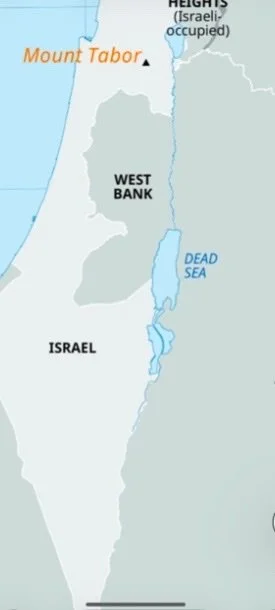
Think about this, if there is an army with a tactical advantage of having chariots, then it would stand to reason that they couldn’t travel up a mountain. This mountain then gave the Israelite army a tactical advantage. The element of surprise is getting ready to happen when the army of the Israelites go down to the valley and find the army of Sisera. I can imagine them saying, “Sheez, where did these guys come from?!!!!!.
9.Who was he instructed to take with him? 10.What was Barak’s response to Deborah?
What a scaredy cat!!!! I’ve read a lot of commentaries who said that Barak was not scared, that he only wanted to make sure he was operating in and through the will of God. He sounds like a scaredy cat to me though.
11.How did Deborah respond to Barak?
One of the most emasculating things that can happen to a man is to get beaten up by a girl. Barak is not going to get beaten up by a girl, but he is going to get beaten out by a girl.
There are times that I really have not wanted to do something I knew God wanted me to do. On most of those occasions, it’s because whatever I’m being called to do is hard and it takes energy and I have a very limited amount of that. Generally, it’s not because I’m scared. Being scared to do something really throws a whole new layer of difficulty on top of what might already be going on.
I remember once when we were in another church and Todd was the chairman of the deacons, he proposed and the deacons voted on whether or not to be involved in a particular ministry. They voted affirmatively. But when it came time for one particular deacon to minister, he told Todd that he just didn’t feel like he was called to do this. He missed out on one of the greatest missions opportunities and blessings ever!
12.What was God going to do for His army in Judges 4:7?
13.Let me ask you a question, if you say “no” to something that God is asking you to do, does that thing just go undone?
Friend, if God wants to use you to accomplish His plan, He is setting you aside for something great, regardless of how big or small the request might be. Don’t say “no” or you’ll miss out on the blessing. I have a cousin who is married to a man named Steve. I’ve heard her jokingly say, “Here I am Lord, send Steve”. This always cracks me up. The prophet Isaiah so famously said, “Here I am Lord, send me”. Too many people just don’t want to be involved. One of my favorite verses in the Bible demonstrates God’s plan if indeed the one to whom He has called says “no” to the plan. Read Esther 4:14. What does Mordecai tell Esther will happen if she refuses to do what Mordecai asked her to do? (Keep in mind, Mordecai was speaking on behalf of the Jews who were and still are God’s chosen people.)
Let me tell you something, you are not the only game in town. If you refuse to do what the Lord has called you to do, then He will find someone else who will say “yes”. Barak said “yes”, but with conditions. I think God would much rather we say “yes” without any conditions.
14.Here is something that I find quite interesting. Who is mentioned and who is not in Hebrews 11:32?
15.What part of Hebrews 11:33-34 do you think might pertain to Barak?
I can’t tell you why Deborah is omitted from the hall of faith, because she definitely had faith and courage. But courage is not the absence of fear. Courage is marching into a situation despite one’s fear. Barak might have had some fear, but as other commentators have pointed out, it is possible that he simply needed confirmation from the woman recognized as a judge and prophetess to make certain that this military campaign was indeed ordained by God.
There were others in this list who were tremendously flawed, it wasn’t just Barak. God beautifully illustrates throughout this book that He can call and use the flawed to carry out His plans. This has nothing to do with gender. Barak also had to submit to the knowledge that if Deborah marched into battle with him, he would not get the glory. He was willing to concede to that. So while it might confuse us as to why Barak is mentioned in the hall of faith and Deborah is not, I understand why this might be. Scripture doesn’t say a thing about her being afraid. It doesn’t say a thing about her having any hesitation or reservations. This was not a stretch for her, but it certainly was for Barak and for that reason, I believe he is in this list.
16.What do you believe is meant by 2 Cor. 12:10?
This verse seems to be contradictory. It is one of the greatest paradoxes in the Bible. Truly, when we get to the end of ourselves and realize that we simply cannot do whatever we have to do and that if we do, then some higher power must take over. In this regard, it requires humility to get to this place and faith to allow God to take over and say, “Lord, I can’t, but You can through me.”
In lesson 1, I gave you a list of the judges and I told you then that there are many scholars who do not consider Barak to be a judge, only a military commander. Scripture does not specifically tell us that Barak was a judge. We know that Deborah was because the text says that she is.
17.Who did Deborah say would get the glory for the battle if she had to go into battle with Barak?
18.Did she mean herself?
19.In Judges 4:9, where did Deborah and Barak go?
20.In Judges 4:10, who went up for the battle?
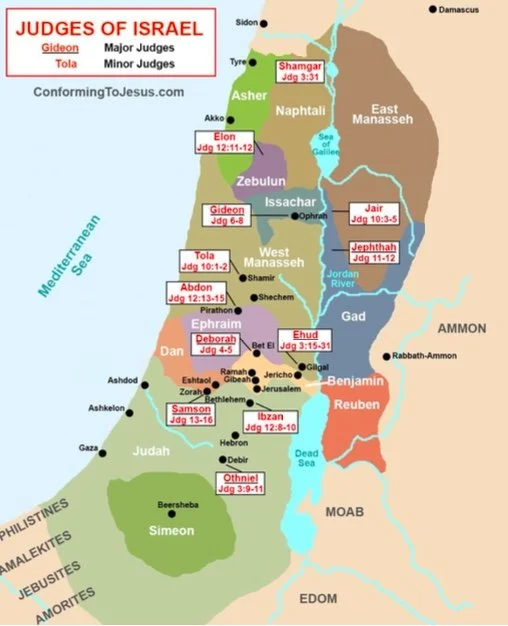
The map below is a great map so that you can see where each judge lived and ruled from. They were spread throughout the land of Israel. This map comes from the website, ConformingToJesus.com.
21.Read Judges 4:11-13. Who were the Kenites?
We read about the Kenites in Judges 1. The Kenites lived in the area of Midian back prior to the exodus which was just south of Canaan near Mt. Sinai.
Moses married a Kenite woman named Zipporah (Exodus 2:16-21). His father-in-law was Jethro (aka, Reuel), a Kenite. Jethro was a priest in Midian which tells us that they knew enough about God to have a priest direct them in spiritual matters. There are some scholars who believe that the Kenites and the Midianites were related in some way. In Num. 10:29, Jethro/Reuel was referred to as “the Midianite”. When Moses led the children of Israel out of bondage in Egypt, Jethro and many other Kenites joined them in their travels. The Kenites lived for a while near Jericho.
22.They later settled in another place. Where did they settle according to Judges 1:16?
23.There was, however, a Kenite who moved north near Kedesh. Who was this Kenite? (Judges 4:11)
The Kenites lived amongst the Canaanites and this man named Heber had diplomatic relations with both the Israelites and the Canaanites. We’ll learn a little bit more about them when we get into lesson 4.
24.In Judges 4:12, who told Sisera about Barak?
The Terebinth tree is one of the trees that pagan shrines would have been built under. This lets us know that Heber had left the worship of the one true God and had adopted the worship of the Canaanite gods.
25.What military advantage did Sisera possess?
26.Read Judges 4:13-16. What did Deborah tell Barak?
I could never count the times I’ve prayed for myself and others that the Lord would go before me and before them into a difficult talk with loved ones, or into a surgery, or on a trip. When the children of Israel marched into battle, they often carried the ark of the covenant with them ahead of everyone else. Over the mercy seat was where the presence of God resided. So yes, He did go before them in a physical, tangible way that was also spiritual. When they crossed the Jordan River and when they marched into Jericho, the presence of God preceded them.
I want you to know this, wherever you are and whatever you’re dealing with today, God is already there. Your battlefield is His victory! Deborah wanted Barak to have the calm assurance (because he needed it) that God was already there on that battlefield and that the battle had already been won.
27.From where did Barak come and who was with him? 28.Where did the Lord route Sisera and his army?
Think about this, if you are in a chariot, you have a definite tactical advantage over those who are just on horseback or foot. But, that is only true if you are on hard ground, and on flat land. Remember, Barak was coming from a mountain. Chariots would not have been beneficial on that kind of terrain.
29.How many of Sisera’s army was left?
Chapter 5 indicates that rain was coming down and that would have caused the ground to be muddy and it would have caused the chariots to be bogged down.
30.What do you think is meant in Judges 4:15 by “And the Lord routed Sisera”?
Our God is a sovereign God. He is in charge of all things. He providentially delivered Sisera and his army straight into the hands of Barak and his army. God caused the enemy of Israel to flee in different directions. This story is about to get a whole lot more interesting!
31.Read Judges 4:17-23. What do you learn about any kind of political alliance between Heber and Jabin?
The word “alighted” in v. 15 means that Sisera got down from his chariot. So here’s the BIG question, why did Sisera get off his chariot? That chariot gave him a tactical advantage. The Israelites didn’t have chariots. Just imagine being in a battle with men in chariots who had the best military equipment of the day and you are in an army of scruffy guys with clubs and oxgoads. This past July 4, we celebrated the 250th anniversary of the founding of our great country. When the Revolutionary War started, the patriots were much like the Israelites, just a bunch of scruffy farmhands with no sophisticated weapons of war, and yet, God was on their side, just as He was on the side of Israel.
32.Read Judges 5:1-5. What kind of weather pattern came about during this battle?
Most likely, when they got down to the Kidron Valley, they were close to the Kishon River. If you’re traveling by the river bed and it rains hard, the ground is going to be soft and if the river overflows, then it will be like sinking sand. That is not good terrain for chariots to go full steam ahead on. In fact, that’s the kind of conditions that could get a chariot stuck and once your chariot is stuck, then there goes your tactical advantage.
We earlier discussed the Canaanite god, Baal. Baal played a versatile role in the pagan practices of the Canaanites. Baal was considered to be the most powerful of all the gods. Before Israel even got into the Promised Land, God warned them about the pagan worship practices of the Canaanites in Deut. 6:14-15. The Canaanites believed Baal to be the god of fertility, both human, animal, and earth. And thus, this god was thought to control the rains. One of the great things about the story of Elijah when he was atop Mt. Carmel, was that he demonstrated that it is the One True God who controls the rains and not Baal. (1 Kings 17-18)
What happened here with Sistera’s army was very similar in that the people who thought their god was so great and was the one who could send rain or withhold rain ended up finding out who actually does control the rain. When God sent the rain, He did so to assist His people in battle, but also to humiliate the worshipers of Baal. Their god was proven to be a complete and total fraud.
33.Where did Sisera flee to?
34.Where was Heber pitching his tent? In other words, where did they live?
Depending on which translation of the Bible you are using, you might read, “the Oak of Zaanannim” or “the Terebinth Tree”. These are one in the same although a Terebinth Tree is not an oak. The Terebinth Tree was quite famous. It was located in Zaanannim, which was on the border of the tribe of Naphtali.
35.What do you learn about this tree in Joshua 19:33?
This tree can grow to be 40 ft. high. Did Heber the Kenite adopt the pagan religious practices of the Kenites? It would appear that this is a strong possibility.
36.The Bible issues a strong warning regarding trees. What is it? (Deut. 12:2-3)
The Canaanites were known for having places of worship for their gods under “great trees”. The Terebinth Tree was a huge tree that could live a long, long time. The possibility that Heber had adopted the religious practices of the Canaanites is consistent with the text here.
Most Kenites lived in the southern wilderness of Judah. Heber apparently severed ties with them and migrated to the far north near the territory of Naphtali. Heber was in good standing with King Jabin even though this king was actively oppressing Israel. If Heber had not been on friendly terms with Jabin, Sisera would not have fled to his tent.
God can use anything and anyone to accommodate His purpose. He used Nebuchadnezzar, Pharoah, Pontius Pilate and others to accomplish His purpose. All of these individuals were about as anti-God as a person could be in their belief system. God used Heber and Jael who had more than likely defected from the faith to deliver Israel from the hand of an evil enemy.
37.Now, back to our story. In Judges 4:17, what do you learn?
Middle Eastern hospitality was very welcoming in those days. If you were in someone’s tent, you were under their protection. If you recall in Gen. 19, when the homosexual men of Sodom demanded that Lot send out his visitors (the angels who came to rescue him), Lot was willing to send out his virgin daughters who were engaged to be married before he sent out these angels who appeared to him in the form of human men. That seems incredibly wicked to us and that Lot had misplaced values, but that was the culture at that time.
38.Jael recognized Sisera and welcomed him into her tent. What did Sisera request of her after she covered him with a rug?
I’m sure he was thirsty. All that evil-doing makes a fella thirsty! But if I’m hot and sweaty and thirsty, I want a drink of cold water. Sisera didn’t get that drink of cold water.
39.What did he get?
Because there was no refrigeration, he would have gotten warm milk, probably something they called kefir. Kefir was a sour, tangy drink made by fermenting animal milk with gelatinous starter clusters called kefir grains. It tastes like thin, drinkable yogurt. YUCK! This would be the last thing that would satisfy my thirst if I’m thirsty.
40.What did Sisera instruct Jael to do?
Because Sisera was weary, he fell asleep. That kefir assisted in this as well. Kefir has tryptophan in it which causes a person to be sleepy. It’s the same active amino acid that we find in turkey. After a good Thanksgiving meal, we often find ourselves sleepy. This amino acid converts into melatonin which helps to prepare the body for rest.
41.Sisera fell asleep quickly. When he fell asleep, what did Jael do?
When Deborah told Barak that a woman would get the glory for the battle instead of him, she wasn’t speaking of herself, she was speaking of Jael. We need to remember that Deborah was also a prophetess, so she knew such things.
In Bedouin culture, the women were the keepers of the tents and they were the ones who did the hard job of erecting the tents. These women were hard workers who were strong and were accustomed to using a hammer on a tent peg. It doesn’t seem very hospitable to drive a tent peg through someone’s skull. So while it appears that Heber was on good terms with Sisera and Jabin, his wife apparently did not share his affection for them.
There are some Bible commentators who suggest that conquerors had their way with women and in that culture at that time, no man would enter another man’s tent if the husband wasn’t present unless he had other less honorable intentions. Did Jael believe she was going to be raped when Sisera woke up? Perhaps. We just do not know.
To be killed by a woman was the ultimate disgrace in that culture. Even in our own culture, if a little girl beats up a little boy, that boy has to live with the humiliation that he got beat up by a girl. This is not the only instance in the book of Judges where a woman beats up and/or kills a man. There are 2 other instances that we’ll study about later on.
42.What ends up happening to Jabin, the king of Hazor (Canaan)?
Judges 5 leads us into a poetic version of this story that was sung by Deborah. It is considered to be a literary classic.
43.What kind of book is referenced in Num. 21:13-14?
The extra-biblical book of Jasher refers to The Book of the Wars of the Lord as a collection of victory songs composed by Moses, Joshua, and the children of Israel. Judges 5 is considered by some to be one of the finest war poems ever written. It is thought that The Song of Deborah was part of The Book of the Wars of the Lord. This song came about after the battle. I love that it was common practice to sing songs of worship after a conquest. Did you know that Jews pray after a meal instead of before a meal? It is the same idea as in war, you thank God after you receive of His goodness. Ancient Jews would sometimes pray before and after meals.
44.Read Deut. 8:10 and fill in the blanks:
1.
2.
3.
4. Forthe_______________________________________________________________.
When you have ______________________________________________________. And you are __________________________________________________________. Then, you shall _______________________________________________________.
This is similar in nature. They praised God after the battle. There are concepts expressed in this one verse:
Gratitude - Always thank God for His provision.
Humility - Don’t ever get so comfortable in what God has blessed you with that you forget the One who gave it to you.
Memory - Remember God’s goodness towards you in times past. Obedience - Continue following God’s precepts in the present, especially after achieving success and prosperity.
When Barak came by Jael’s tent, she proudly displayed her handiwork and how she’d given Sisera a splitting headache. Neither Sisera nor King Jabin stood a chance against the armies of God. If God is against you, it doesn’t matter who is for you, you’re toast. If God is for you, it doesn’t matter who is against you, you’re a victor. It matters who is on your side!
45.Go ahead and read all of Judges 5. What came first, the people willingly offering themselves, or the Lord avenging them?
46.In Judges 5:6-7, why do you suppose that the highways were deserted and people went by round-about ways?
I am assuming by the text that perhaps it wasn’t exactly safe for the people to go out on the highways. If that is the case, it would make sense why the people chose to go a longer way around to get to their destination. I heard one pastor say of this that perhaps they had defunded the police! Haha!!!
47.What changed all of this according to Judges 5:7?
Deborah wore many hats:
A mom
A wife
A matriarch to an entire nation A judge
A prophetess
48.That’s a tall order for one little gal! What started the downfall of Israel in v. 8?
Israel had a bad habit of leaving the God who loved them and suffering the consequences of that. Why in the world wouldn’t there be a spear or a shield amongst 40,000 in Israel? After 20 years of following other gods and having war within their own gates, I’d imagine the people were just so beaten down that they didn’t even try. That’s what happens when you are repeatedly beaten up on by other countries. You can look around the world and see this pattern in countries like Venezuela and Cuba where the people have been so demoralized that they all but lost hope.
Gabe and I recently saw the movie, An Uprising. I don’t encourage anyone to see it. It was not a good movie. It was, however, the true story of the peasants’ revolt in England in 1381 following the Black Death. The poor peasants rose up to attack those who had overtaxed them and they were so thrilled that the king listened to their pleas that they laid down their weapons. When they did, they were immediately attacked and most of them were killed. Desperate people can lose hope quickly and gain hope quickly. Neither is a good option.
In this song, Deborah begins laying out the tribes of Israel who assisted and those who didn’t. I like a person who tells it like it is. Perhaps this is one reason that Deborah is a hero to me.
49.Look through Judges 5:12-18 and describe each of the tribes mentioned below and their contribution or lack of it to the war effort:
Ephraim Benjamin Manasseh (Machir) Zebulun
Issachar Reuben Dan Asher Naphtali
Amongst these tribes, there were some who had valiant men and also men who just thought about it (ie - “there were great searching of heart”). There are things I really need to think about and pray about and then there are things that I absolutely know I need to do and I’m compelled to do them.
When my son, Gabe, was diagnosed with brain cancer, I didn’t have a committee meeting with my family and a prayer time to see if I needed to go to Memphis with him to take care of him. I knew there was no place else I’d be but by his side. I believe that what Deborah is saying here in v. 16 is that there were fellas who kept trying to figure out whether or not they should go or stay and because they didn’t figure it out, they didn’t engage in the war and they lost the blessing and honor of fighting.
Friends, God is keeping a record. That should frighten all of us because we will all stand before Him one day and give an account of what we’ve done for Him.
I want to just briefly mention here that in Judges 5:17, the lands of Gad and Gilead are interchangeable. We’ll learn more about that when we get over to Judges 12.
All 12 tribes are not mentioned here. Some would have been far away, but even some of the ones who were far away came and fought.
50.What was the curse on Meroz in Judges 5:23?
Unlike some of the other distant tribes, Meroz was apparently located near the battle site or along the enemy’s escape route. We don’t know exactly which tribal territory Meroz was located in. This place is never mentioned anywhere else in the Bible or known history. Perhaps that is because it was cursed from above. They chose comfort instead of duty. And because of this, every single citizen of Meroz was cursed. Jesus said in Matthew 12:30, “He who is not with Me is against Me.” There’s no “sitting this one out” or standing by and trying to make up your mind. You are either for Him or you are against Him.
I always appreciate servant leaders. Both Deborah and Barak were servant leaders. And there were many others who were also servant leaders. But some were lazy and just sat on the sidelines. I spent 3 months in the Amazon jungle years ago while I was on a mission trip. It was grueling. The weather was blistering and stayed in 3 digits the entire summer. There were a few adults with us on this long trip. Although I was in college, I don’t think the Tennessee Baptist Convention considered any of us college students to be adults. There were 2 adults who got out in the sun and worked alongside us like dogs the entire summer and there were 2 adults who stayed inside and I’m still not quite sure what they did. Who do you think we respected more? That’s a no-brainer. We respected the 2 who worked hard and by example gained our trust. There were tribes who were satisfied to sit on the sidelines and do nothing and because Deborah called those tribes out by name, their lack of service is noted for all eternity.
51.What does Deborah imagine is going on in the mind of Sisera’s mother? 52.And what does she imagine others are telling Sisera’s mother?
53.At the very end of Judges 5, how long was the land undisturbed?
This period of time will take us into the next generation. Remember, sin is generational and so is revival. What one generation tolerates, the next will accept.
I ask you in closing this week, what do you think God requires of you? He definitely requires more than just sitting on the sidelines. To serve Him, you have to do something. Just sitting and watching someone else do something is not enough. Are you waking up every morning open to being used by God for His glory? Are you waking up every morning fearful that God might want you to do something out of your comfort zone or excited that He is going before you and equipping you to do something you could never do by yourself?
I love the picture below. My friend, Allison posted it recently. I want a tshirt with this on it! Wanted for heroic deeds _____(your name)______. Be a hero for the Lord!